Behind the scenes of our sourcing: 4 countries, 8 producers, +290 SKUs
Cameroon, Togo, Rwanda, Egypt: a look back at a week of direct sourcing from African producers, with no middlemen.
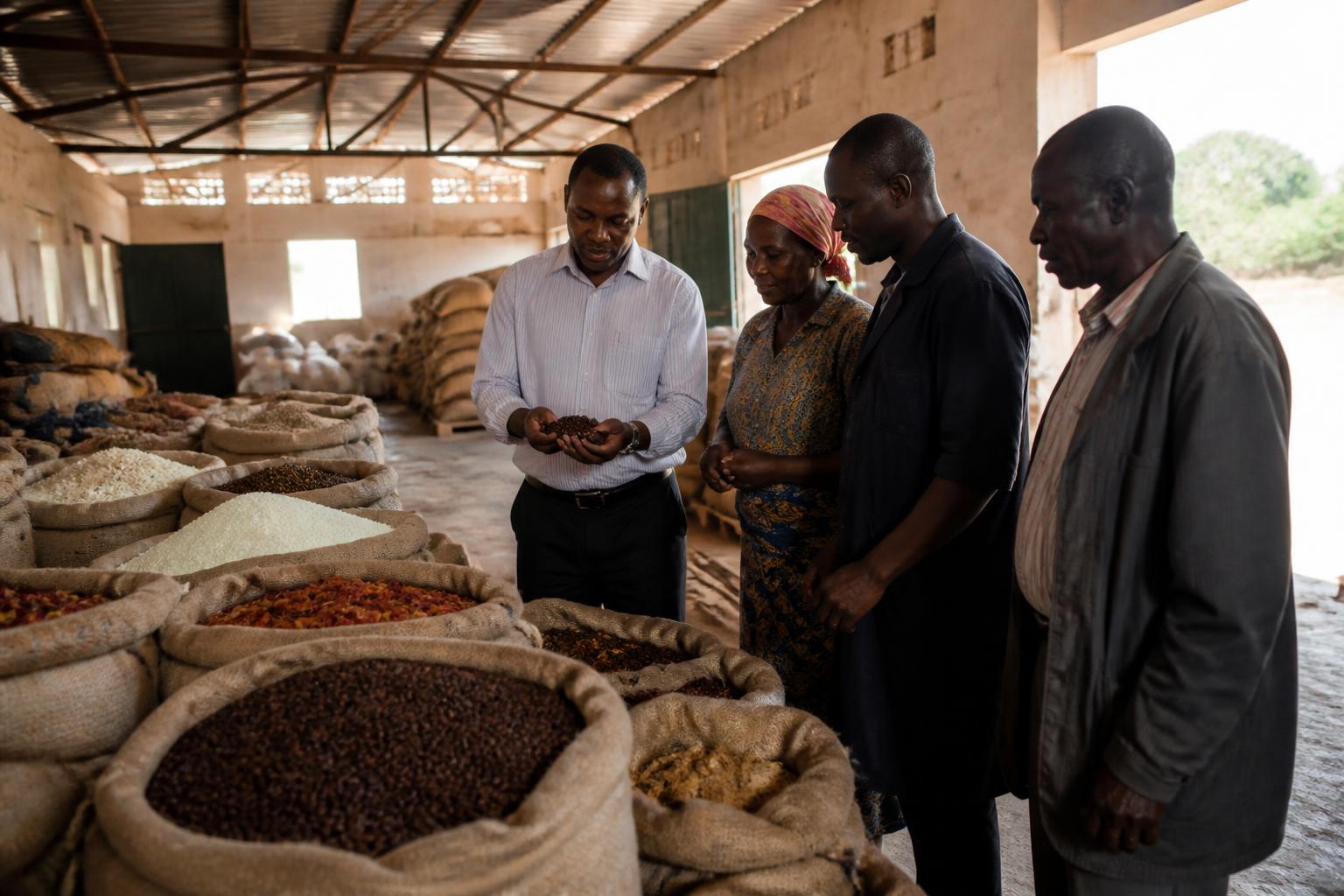
At AFD44, a sourcing week rarely looks like a trade-show visit. It happens on the phone with cooperatives, inside processing-plant catalogues and on shipping docks. This week our work took us from Cameroon to Rwanda, via Togo and Egypt, with a single guiding rule: trace products back to the producer and cut out the middlemen who inflate prices without adding quality.
The producers we met this week
Cameroon
128 SKUsAgrobio Food & Services
A Cameroonian processor working directly with farming cooperatives: maize and cassava flours, crushed koki, ground spices (chilli, turmeric, fennel), dried fruits (safou, orange), artisanal jams, locally pressed juices and nectars (ginger, lemon, pineapple, orange) plus a snack range — coated peanuts, ripe plantain chips, artisanal caramels.
Togo
107 SKUsGold Food Africa
Our long-standing partner in Lomé, specialising in leafy greens and West African groceries: adémè (jute mallow), gboma, dried okra, cassava and maize flours, fermented condiments. A range designed for Togolese, Beninese and Ghanaian diaspora kitchens.
Rwanda
24 SKUsSouk Farms · Afri Foods · Kivu Noir · Caferwa (Tora Coffee) · Gorilla's Coffee
The busiest week for meetings: Souk Farms and Afri Foods for fresh fruit and vegetables (extra pineapple, avocados, white aubergine, chillies), and four roasters for arabica coffee from the Kivu hills — Kivu Noir (including limited-edition whole bean and ground), Caferwa with its Tora brand, and Gorilla's Coffee. All work directly with producer cooperatives.
Egypt
35 SKUsFresh Tokri Foods
Bulk range (spices, rice, lentils, pulses, Himalayan pink salt) listed as “pending validation”. Packaging analysis led us to suspect a white-label operation, so we froze publication while we trace back to the original packing plant.
Our sourcing method, step by step
- Identify the actual producer or processor, never the intermediate reseller.
- Require the manufacturer's official product shots: no product goes live with a generated image.
- Verify the true origin, the packaging format and the minimum order quantity (MOQ).
- Estimate the landed price at destination (Europe and the Americas), including freight and import duties.
- Run every SKU through a “pending validation” stage before publication.
Why cutting out middlemen changes everything
In classic supply chains, a bag of Rwandan coffee or a case of Cameroonian cassava flour can pass through three or four hands before reaching a wholesaler in Europe or North America. Each one takes a margin, lengthens lead times and blurs traceability. By dealing directly with Agrobio Food & Services, Gold Food Africa, Kivu Noir or Souk Farms, we secure fairer prices for our professional customers — in France, across the rest of Europe and in the Americas — and above all fairer pay for the producers.
That standard has a cost: some products spotted this week will not go online. That is the case for several Egyptian SKUs suspected of being white-labelled, and for every item where we could not obtain an official manufacturer photo. A shorter catalogue is better than an approximate one.
What about next week?
We are continuing to prospect in Côte d'Ivoire, Ghana and Senegal: artisanal red palm oils, attiéké, peanuts and hibiscus juice. Newly validated SKUs appear progressively in the catalogue and in the New arrivals section.
Looking for an African product you can't find anywhere?
Tell us what you're missing: we go looking for the producer and come back with a landed price at your door, in Europe or the Americas.